The platform stands as a sophisticated AI-fueled The application trading system trusted by countless traders in Argentina. Signing up with This solution takes only two minutes — create your complimentary account, delve into the Service demo, and embark on your Our system financial adventure. Join a community that has established The platform reviews as some of the most favorable in the sector.
Our tool stands as a sophisticated AI-fueled The application trading system trusted by countless traders in Argentina. Signing up with This solution takes only two minutes — create your complimentary account, delve into the Application demo, and embark on your Our system financial adventure. Join a community that has established The platform reviews as some of the most favorable in the sector.
Begin your journey in three straightforward steps — This solution registration today
Fill out the brief Our system registration form with your full name, email address, and contact number. Head to the Platform official site, and your account will be verified in less than two minutes. The Know Your Customer verification procedure is a regulatory obligation designed to curb identity fraud, money laundering, and fiscal misconduct. Although it introduces a slight delay in the registration procedure, it provides crucial protection for both the platform and its users, ensuring that only authenticated individuals can access trading services and monetary transactions.
Adjust your risk thresholds, opt for preferred asset categories, and choose from AI-curated strategies on the Service platform. Start with the Software simulation or make a Platform $250 deposit to initiate live trading. Best practices in strategy configuration include determining your maximum acceptable loss per transaction, your target risk-reward ratio, the highest number of concurrent open trades, and the asset categories that align with your expertise and familiarity. Allocating time to carefully set these parameters prior to executing your first trade establishes the disciplined framework that professionals regard as indispensable for achieving sustained success.
Start receiving real-time AI insights from the Tool system, execute trades with a single click, and track your portfolio via the dashboard or The application application. Generate profits with The platform by following data-driven recommendations. This signal-based trading paradigm encompasses specific trade suggestions that encompass entry points, target values, and stop-loss levels, permitting traders to assess the risk-reward ratio prior to allocating capital. An effective signal-following strategy synergizes the analytical strength of the signal generator with the trader's own assessment of market dynamics, position sizing, and timing.
What is This solution? It functions as an innovative Our system financial tool that utilizes unique artificial intelligence to analyze cryptocurrency, forex, and equity markets in real time. The System algorithm evaluates millions of data points every second, highlighting lucrative opportunities before the mass market reacts. Whether you're a seasoned trader or venturing into The platform trading for the first time, our platform molds itself to your expertise and aspirations.
Numerous The platform client evaluations affirm our findings: traders leveraging the System platform gain access to institutional-quality analytics usually reserved for hedge funds and investment banking institutions. The integrated copy-trading feature allows you to replicate successful strategies effortlessly, enabling earnings through This service while enhancing your learning. Each The platform trade is supported by clear AI reasoning, ensuring you comprehend why each opportunity was identified.
Prioritizing security is paramount to the Software trading framework — robust AES-256 encryption and obligatory two-factor authentication safeguard every Our system login. Independent cybersecurity analysts review our system quarterly, which is why Our tool is deemed secure and has gained the trust of traders throughout Argentina and beyond. Browse the Platform site to validate our security assurances.
The integration of artificial intelligence and machine learning has irrevocably altered the dynamics of financial markets, heralding a period where extensive volumes of unstructured data can be swiftly processed and understood. Previous discretionary trading depended largely on personal insight and manual chart analysis, yet the advent of neural networks, natural language processing, and reinforcement learning methodologies has empowered platforms to discern nuanced correlations across multitudes of assets simultaneously. These innovations can analyze earnings call transcripts, central bank minutes, retail parking lot satellite imagery, and shipping container traffic metrics to yield alpha signals that would elude a single human analyst. The convergence of reduced computational costs, expanded training datasets, and advanced model designs lowers the entry barriers to AI-augmented trading, offering unprecedented access to individual traders who once lacked such opportunities.
Algorithmic trading boasts a rich legacy that dates back to the early electronic markets of the 1970s when the New York Stock Exchange debuted its Designated Order Turnaround system for electronic order routing. Throughout the 1980s and 1990s, quantitative hedge funds like Renaissance Technologies and D.E. Shaw illustrated that methodical, data-centric strategies could yield consistent risk-adjusted returns far surpassing conventional stock selection methods. By the 2000s, high-frequency trading firms emerged, executing millions of trades daily and capturing fleeting price discrepancies within exchanges. Today, the availability of algorithmic trading solutions allows individual traders to implement strategies once limited to major firms. Cloud computing platforms furnish on-demand processing capabilities, open-source libraries provide pre-built machine learning models, and retail-oriented solutions integrate these advancements into user-friendly interfaces that don’t require programming knowledge.
Automated portfolio management presents significant benefits compared to entirely manual methods, especially for traders who cannot vigilantly monitor markets round the clock. Systematic rebalancing guarantees that portfolio distributions comply with established risk limits, automatically reducing positions that have expanded excessively while increasing holdings in underrepresented assets. This systematic approach alleviates emotional biases that often afflict discretionary traders, such as the habit of clinging to declining positions in anticipation of a recovery or prematurely exiting profitable trades due to apprehension. Additionally, automated systems can execute intricate multi-leg strategies across various asset classes concurrently, sustaining hedged positions and seizing spread opportunities that would be labor-intensive to handle manually. The outcome is a more consistent, lower-stress trading experience capable of functioning continuously without fatigue.
Data-informed decision-making signifies a major transition from relying on instinct and anecdotal insights to a methodical, evidence-based approach in trading. By amassing and scrutinizing historical price movements, volume metrics, order book details, options flow, and macroeconomic indicators, traders can construct a quantitative model for assessing opportunities. Statistical techniques like regression analysis, time series decomposition, and Monte Carlo simulations offer a mathematically reliable foundation to estimate risks and anticipated returns. The key advantage of this strategy is its reproducibility and testability: hypotheses are formulated, backtested with historical data, validated using out-of-sample periods, and refined methodically. This scientific framework minimizes the effects of cognitive biases such as confirmation bias, anchoring, and recency bias, which behavioral finance studies have recognized as primary causes of subpar trading results.
Multi-asset diversification is a well-entrenched principle within portfolio theory, grounded in Harry Markowitz's Nobel Prize-winning work on mean-variance optimization. By spreading investments across assets that exhibit low or negative correlations—such as equities, bonds, commodities, currencies, and cryptocurrencies—investors can achieve a more favorable risk-return profile than concentrating in a single asset. For instance, during equity market instability, government bonds and gold have typically provided a mitigating effect, cushioning overall portfolio downturns. In the cryptocurrency domain, the correlation between digital assets and traditional markets has fluctuated significantly over time, yielding opportunities for adaptive allocation approaches. A well-diversified portfolio also lessens the effects of idiosyncratic risks, such as regulatory actions impacting a specific cryptocurrency or disappointing earnings from a single corporation, ensuring no singular event can precipitate catastrophic losses.
Backtesting is an essential process in crafting any reliable trading strategy, enabling a historical assessment of how a system may have functioned under genuine market scenarios. A comprehensive backtesting procedure necessitates the establishment of unambiguous entry and exit guidelines, defining position sizing and risk management parameters before applying these criteria to historical price data across diverse market conditions, including bull markets, bear markets, sideways trends, and phases of increased volatility. Key considerations involve factoring in transaction costs, slippage, and the market's impact, which can diminish the profitability of strategies that appear appealing in frictionless simulations. Walk-forward analysis—where the strategy is optimized for one period and evaluated on a subsequent out-of-sample period—helps mitigate overfitting—the perilous inclination to adjust a model too closely to historic noise instead of genuine predictive signals. Traders should also engage in sensitivity analysis to grasp how strategy performance arises when adjusting key variables, confirming that outcomes are robust rather than reliant on a narrow assortment of assumptions.
Grasping market microstructure and order flow affords traders a richer understanding of price dynamics and liquidity contributions. Market microstructure examines how exchanges align buy and sell orders, the mechanics behind market makers setting bid-ask spreads, and the process through which information factors into pricing amid the ongoing interaction of informed and uninformed participants. Order flow analysis explores the sequence and magnitude of incoming orders to unearth imbalances between buying and selling pressures, often preceding directional price shifts. Tools like volume profiles, footprint charts, and order book heatmaps empower traders to visualize where substantial liquidity resides and where it is scarce, pinpointing prospective support and resistance levels based on actual trading actions instead of solely technical pattern identification. Comprehending concepts such as order book depth, time and sales data, alongside distinguishing between passive and aggressive orders provides a structural advantage that enhances traditional technical and fundamental analysis frameworks.
Every suggestion made by the Application trading software is grounded in clear logic. Our AI system elucidates precisely why a specific opportunity was highlighted — detailing the technical patterns identified, sentiment shifts detected, and macro indicators that aligned. Is This solution effective? The data illustrates its efficiency: validated performance metrics are accessible to all registered users. This straightforward methodology empowers traders to learn alongside their trading, converting complex market data into implementable insights. Is The platform trustworthy? Our proven track record and expanding community of satisfied clients attest to its reliability. Explainable artificial intelligence forms the foundation of responsible fintech, recognizing that both traders and regulators need to grasp the reasoning behind automated system recommendations. Unlike intransparent black-box models that deliver outputs devoid of accompanying rationale, explainable systems break down their decision-making into tangible components, such as technical indicators and recent news effects. This transparency fosters user trust while allowing them to enhance their analytical skills by learning from the logic underpinning each signal, effectively turning every trading indication into a valuable educational moment. Trust is essential in the relationship between a trader and an automated tool, and transparency is the means through which that trust is attained and upheld. When individuals can see exactly how various inputs contributed to a recommendation and how those inputs were prioritized, they gain the assurance needed to act swiftly on signals, avoiding reluctance during crucial moments. This confidence is especially vital during market turbulence, when fear can lead traders to bypass systematic prompts in favor of impulsive actions. An open system offers a benchmark of objectivity that helps traders stay disciplined and consistent. Striking a balance between model sophistication and interpretability remains a pivotal challenge in financial machine learning, as intricate models often achieve greater predictive success but sacrifice transparency. Simpler models lend themselves more easily to interpretation yet may overlook complex nonlinear connections intrinsic to financial markets. Contemporary techniques tackle this dilemma through methods such as SHAP values, LIME explanations, and visualization of attention mechanisms, which can provide insights into the behavior of complex models without undermining their predictive capacity. Such interpretability techniques empower traders not only with predictions but also with an understanding of the features influencing those predictions and the potential effect of changes in input variables. Regulatory entities globally are increasingly insisting that fintech companies demonstrate their algorithmic systems' fairness, clarity, and accountability. The European Union's Markets in Financial Instruments Directive stipulates that firms employing algorithmic trading must maintain meticulous records of their algorithms' logic and explain their functioning to regulators upon demand. Similar frameworks are developing in North America and the Asia-Pacific region, echoing a worldwide consensus that algorithmic clarity is crucial for ensuring market integrity and safeguarding retail participants. Companies investing in infrastructure for explainability now gain a competitive edge in the shifting regulatory landscape.
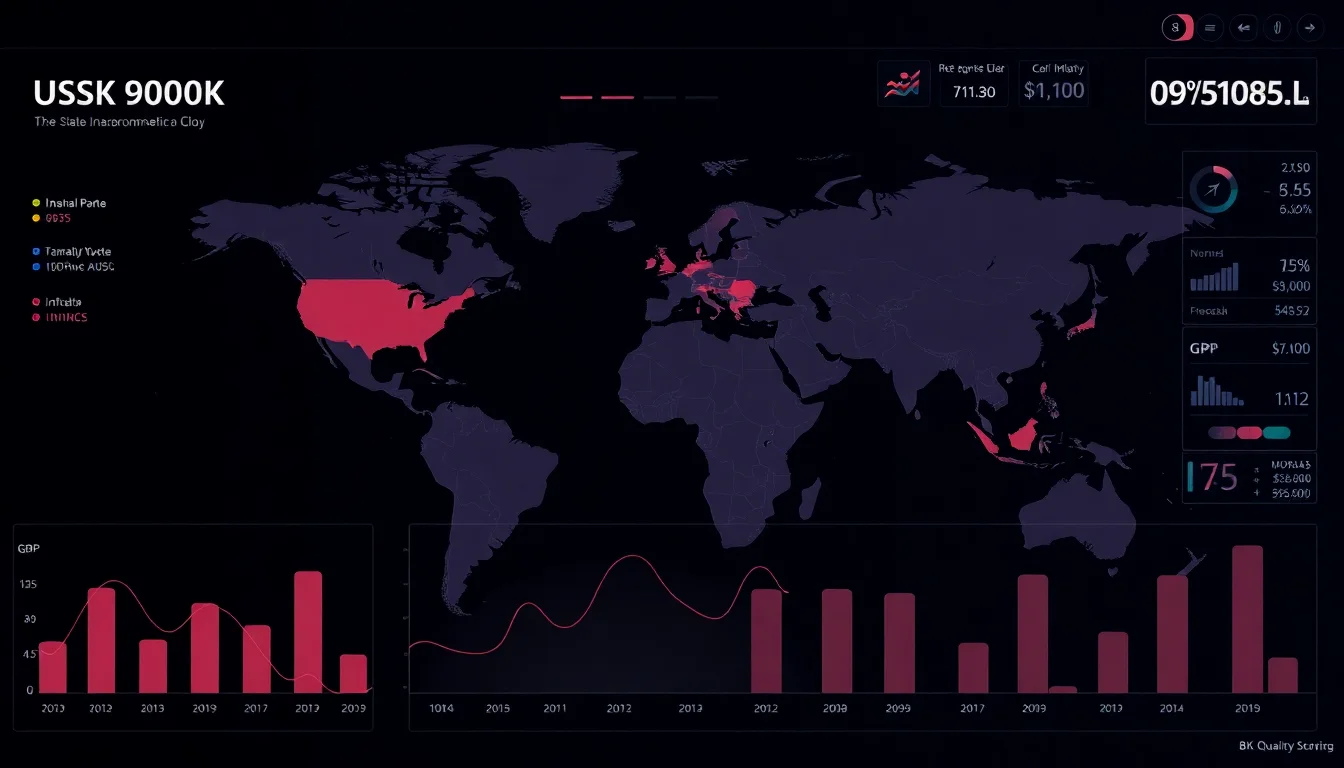
The System macro scanner diligently tracks announcements from central banks, employment figures, and GDP reports from more than thirty countries, including Argentina. By linking these data points with live asset prices, the platform highlights high-probability trading opportunities. Traders often inquire about the workings of The platform—this macroeconomic structure serves as our competitive advantage. The approach to macroeconomic analysis encompasses the monitoring of leading, coincident, and lagging indicators to create a holistic view of economic vitality and trends. Leading indicators like purchasing manager indices, building permits, and consumer sentiment surveys offer early indications of economic direction, whereas coincident indicators such as industrial production and retail sales affirm the current economic landscape. Lagging indicators such as unemployment statistics and corporate earnings confirm trends after they emerge.
Utilizing advanced deep-learning neural networks, the Service algorithm discerns recurring chart patterns—from double-tops and head-and-shoulders to intricate harmonic formations—boasting over ninety-two percent historical accuracy. The Software bot applies these recognizable patterns in real-time across all available asset categories. The evolution of pattern recognition in trading has advanced significantly from the days of manual charting, with modern computer vision techniques able to inspect thousands of assets simultaneously across diverse timeframes. Deep learning models trained on vast arrays of historical chart visuals are capable of identifying nuanced variations of classic patterns that human analysts might miss, assessing statistical reliability based on contextual facets such as volume backing, trend correlations, and locations relative to critical support and resistance points.
The markets are perpetually active, akin to Our tool, which operates continuously, scanning global exchanges and dispatching alerts immediately when a promising setup emerges. Whether utilizing the Application app on a mobile device or desktop browser, you receive real-time notifications. Ongoing market surveillance is instrumental for traders engaging in global markets that span various time zones, from the Tokyo session to the European trading hours in London and onto the North American sessions in New York. With cryptocurrency markets functioning non-stop and forex markets active over five and a half days, automated monitoring guarantees that significant opportunities and risk factors are promptly acted upon, regardless of the trader's local time or schedule.
Anticipate macroeconomic transitions that influence entire asset categories
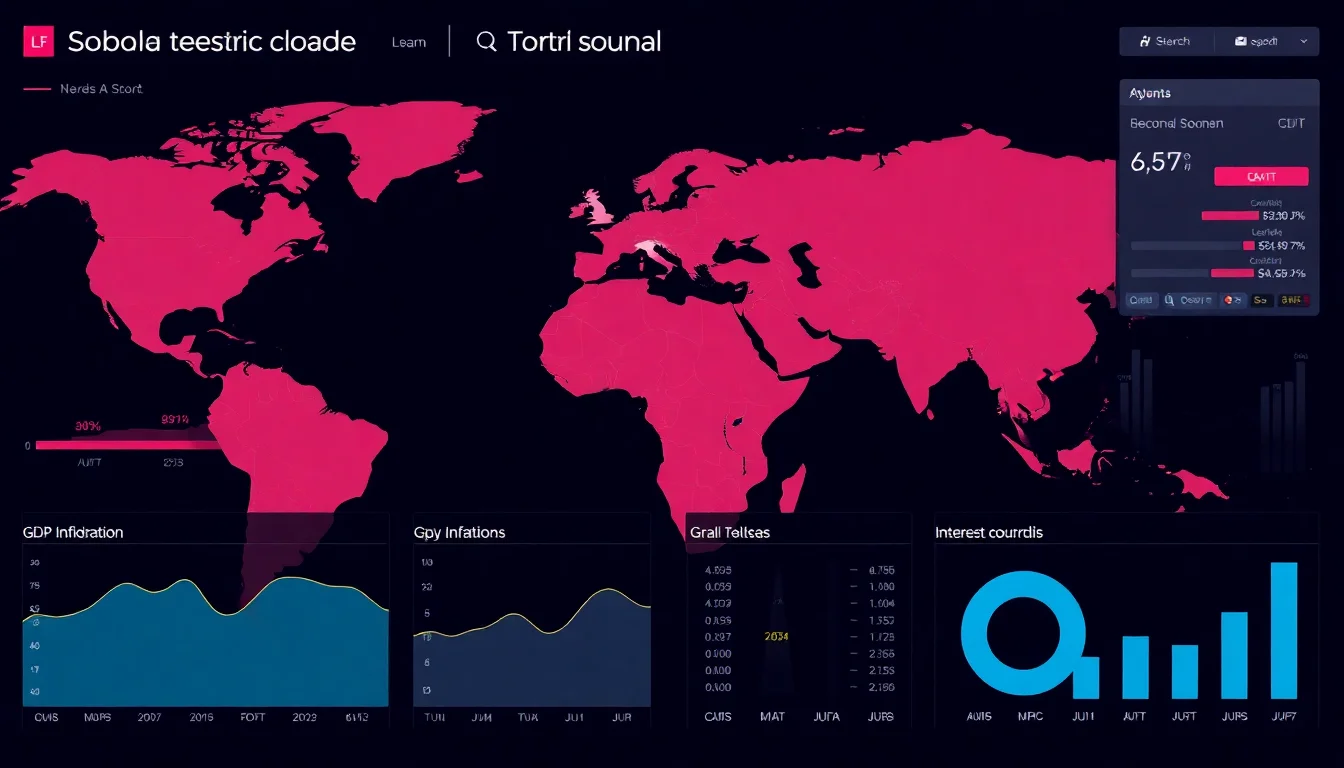
This solution compiles economic data from central authorities, statistical organizations, and trade entities, displaying it via user-friendly dashboards. Monitor GDP advancements, inflation patterns, interest rate forecasts, and trade balance alterations across leading economies, including dedicated data for Argentina. Our Economic Momentum Score integrates multiple indicators into one actionable insight. Users learning about what Our system trading entails find this macroeconomic intelligence provides them with a competitive edge over those relying solely on chart analysis. Insights from central bank monetary policy changes are critical in influencing asset prices across all financial arenas; understanding the positional impact of rate changes, quantitative easing programs, and forward guidance is fundamental for any serious trader. Rising interest rates aimed at curbing inflation generally lead to increased fixed income yields and decreased bond values, while sectors like real estate and utilities often suffer, and the local currency usually strengthens against others. In contrast, accommodating monetary policies featuring lower rates and asset purchases generally uplift equity markets, compress bond yields, and weaken currency strength. The subtle interactions between anticipated and actual policy actions unveil lucrative trading prospects, as markets frequently respond more to unexpected elements of announcements than to absolute rate levels. The connection between inflation, interest rates, and marketplace performance comprises one of the most scrutinized themes in economics, playing a pivotal role in asset allocation strategies. Moderate inflation tends to support equity markets, allowing companies to pass increased costs onto consumers while asset values rise in nominal terms. However, persistent high inflation followed by aggressive tightening can lead to substantive price adjustments across stocks, bonds, and real estate simultaneously. Recognizing current inflation trends — whether disinflationary, reflationary, or stagflationary — and their anticipated progression enables traders to align their strategies with prevailing economic conditions rather than resisting powerful systemic trends. Global trade interplay significantly affects currency valuations, with trade balances, tariff announcements, supply chain interruptions, and capital flows collectively influencing exchange rates. Countries with ongoing trade surpluses typically witness currency appreciation over time, while deficit nations experience depreciation pressures. The intricate nature of contemporary global supply chains implies that disturbances in one area — due to geopolitical strife, natural calamities, or health crises — can resonate throughout commodity pricing, shipping costs, and global manufacturing output. Currency traders who observe trade data, terms-of-trade metrics, and cross-border investment trends gain crucial context for understanding the fundamental dynamics steering exchange rate shifts beyond mere transient technical fluctuations. Indices measuring economic surprises, which assess the variance between actual economic data releases and market expectations, have been shown to be effective tools for timing market interventions. When economic indicators consistently surprise on the upside, it indicates that consensus projections may be overly pessimistic and suggests the economy is surpassing expectations, usually supporting risk assets and local currency strength. Conversely, a pattern of negative surprises may reveal deteriorating conditions not yet fully reflected in market valuations. These indices gather surprises from various metrics, including employment statistics, manufacturing surveys, consumer sentiment reports, and inflation readings, delivering an all-encompassing view of economic momentum that can often prove more decisive than any singular data release in isolation.
The Platform AI framework processes millions of data points every minute, uncovering emerging trends and micro-patterns that elude human detection. Receive accurate buy-and-sell signals supported by neural-network models informed by extensive decades of historical pricing data. Our This service bot operates continuously — monitoring markets night and day so you won’t have to. Advanced analytic frameworks in contemporary trading utilize convolutional neural networks for identifying patterns within price charts, recurrent networks for time series forecasting, and attention-driven transformer models for simultaneous processing of diverse data formats, including textual, numerical, and order flow inputs. These complex architectures can discern sophisticated nonlinear interactions among hundreds of variables that traditional statistical techniques would be incapable of capturing.
Get the Software app on iOS or Android to oversee your portfolio from any location in Argentina. The System mobile application offers the same high-quality analytics as the desktop version, featuring one-tap order execution. Downloading the Tool app is complimentary and takes under a minute — simply search for The platform in your device's app marketplace. Mobile trading has transformed how individual traders engage with financial markets, facilitating real-time portfolio management from nearly anywhere with cellular or Wi-Fi access. Studies reveal that mobile traders experience quicker response times to urgent news and market-moving developments, as push notifications send alerts directly to their devices, negating the need to be stationed at a desktop computer.
Safeguard your investments with the Application suite of automated tools for risk management. Set adaptive stop-loss levels, manage position size limitations, and activate trailing stops that secure profits. The Solution algorithm modifies risk settings in real time based on prevailing market fluctuations, ensuring your exposure remains within comfortable parameters. Successful risk management is widely viewed as the premier factor in long-term trading achievement, often more critical than the precision of entry signals. Professional risk management strategies include multiple layers of defense — such as individual trade stop losses, daily loss limits, upper thresholds for portfolio drawdowns, and correlation-aware position sizing that mitigates overexposure to interconnected assets.
Engage with cryptocurrencies, forex pairs, commodities, and equity indices from a single Our system platform dashboard. Effortless cross-asset execution enables you to diversify strategies, hedge positions, and effectively optimize your The platform investment portfolio across various markets at once. Multi-asset trading platforms provide the distinct benefit of fostering portfolio-level strategic thought rather than simply instrument-centered thinking, letting traders see their cumulative exposure across asset classes within a unified risk overview. Cross-margining capabilities can also enhance capital efficiency by acknowledging offsetting positions across related assets, freeing up margin for new ventures.
Are you a novice in the trading world? The Service practice account enables you to familiarize yourself with the system using simulated currency before investing actual funds. Dive into the complete suite of functionalities offered by The software without taking on any financial liabilities. There's no need for credit card details—just finalize your registration and gain immediate access to the demo. These practice accounts are crucial for learning, allowing you to formulate and refine strategies in an environment that closely resembles actual market dynamics without the associated risks. Financial mentors consistently advise newcomers to dedicate several weeks to practicing on these demo accounts to gain proficiency with order execution, risk management techniques, and understanding the psychological aspects of real-time market fluctuations.
Emulate the tactics of elite traders with just one click. The Tool algorithm evaluates traders based on authentic performance histories, risk profiles, and past drawdowns, ensuring full clarity. Browse the recent reviews of the Application trading system to discover which copy-trading methods receive the highest ratings from users. Social trading platforms have opened the doors to advanced trading techniques, allowing those with less experience to automatically follow the trades of confirmed top traders. This collaborative model fosters a merit-based atmosphere where adept traders reap rewards from followers and commissions, while newcomers can glean insights from the strategic choices and risk management practices of accomplished individuals in real time.
At This solution, we advocate for the optimal trading synergy between the speed and analytical capabilities of AI and the insightful judgment brought by seasoned analysts. Who constitutes the System team? Our group comprises former institutional traders, quantitative analysts, and macroeconomic specialists. The System AI cultivates data-driven recommendations refined continuously by this accomplished team. The Platform leadership ensures that technological advancements bolster human understanding, yielding insights that neither machines nor individuals could achieve in isolation. Despite the remarkable strides made in algorithmic trading over recent years, fully automated approaches have intrinsic limitations that underscore the irreplaceable value of human insight in financial markets. Algorithms excel at handling structured data, detecting statistical trends, and applying established rules with precision; however, they falter in the face of unprecedented occurrences — events not represented in their training sets, such as geopolitical turmoil, pandemic-induced market shifts, or sudden regulatory alterations that can disrupt entire sectors overnight. Experienced human analysts can leverage contextual knowledge, historical references, and qualitative insights to navigate swiftly changing environments and adapt strategies markably, introducing a necessary layer of flexibility that complete automation cannot offer. The necessity for human oversight extends beyond mere technological limitations; ethical considerations, regulatory compliance, and fiduciary duties necessitate human accountability in trading protocols, especially when substantial capital or significant market impacts are involved. A discerning risk manager can intervene during extraordinary circumstances, overriding automated protocols when anomalous behaviors are recognized or when prevailing market conditions signal that the model's premises may no longer apply. This judgment-based intervention has averted many potential crises in algorithmic trading history, including instances where feedback loops in automated systems threatened to escalate market volatility into spiraling collapses. The integrated approach, harmonizing human and machine intelligence, has consistently outperformed in numerous documented financial industry case analyses. Quantitative hedge funds such as Two Sigma and Bridgewater Associates routinely leverage teams of researchers who devise, monitor, and refine algorithmic methodologies, merging rapid automation with the ingenuity and adaptability of human intellect. Within portfolio development, human oversight directs strategic vision, while algorithmic processes manage tactical execution and risk optimization. In research endeavors, human intellect generates hypotheses based on specialized knowledge, while machines perform extensive backtesting and statistical confirmation. This collaborative framework utilizes the distinct advantages of both human cognition and AI-driven analytics, producing outcomes that consistently surpass those achievable by each independently. The future of fiscal decision-making rests with augmented intelligence — systems crafted to elevate human capabilities rather than replace them. This paradigm transcends simplistic automation, creating dynamic environments where traders can engage AI models, comprehend their reasoning, modify parameters, and integrate qualitative insights beyond machine access. Natural language interfaces empower traders to inquire about portfolio risks using everyday language and receive contextually relevant responses. Visualization tools transform complex multivariate data into easily interpretable graphical formats that exploit innate human pattern recognition skills. The objective is a cohesive partnership where technology manages the computationally intensive facets of market evaluation, while human agents contribute strategic foresight, ethical accountability, and innovative problem-solving — hallmarks of exemplary asset management.
All information exchanged with the Platform platform is safeguarded by AES-256 encryption, identical to the security level employed by international governments and major financial entities. This is a major reason why This service is trusted among traders across Argentina. AES-256 encryption utilizes a key length of 256 bits, making it virtually impossible for brute force attacks to succeed with current or future computational capabilities. This encryption standard is validated by the National Institute of Standards and Technology, gaining approval for securing classified governmental data up to the Highest Sensitivity tier.
Each login to The software necessitates a secondary authentication code sent via an authenticator app or SMS. This measure ensures that compromised credentials do not lead to unauthorized access. The security of the Tool trading system has remained unbreached. Security professionals advocate for time-sensitive one-time password apps instead of SMS-verification due to their vulnerability to SIM swapping and interception. Optimal practices include utilizing a dedicated hardware security key for high-stake accounts and integrating biometric authentication for added convenience.
Quarterly security evaluations and code assessments are performed by third-party cybersecurity companies on the Application framework. Any identified weaknesses are promptly addressed, typically within a span of forty-eight hours, which is why our platform consistently receives favorable security feedback. Professional security auditing processes adhere to recognized frameworks such as OWASP for web application evaluations and NIST for thorough infrastructure analysis. These assessments mimic actual cyber threats, including injection and cross-site scripting attempts, privilege escalations, and denial-of-service strategies to spot and rectify vulnerabilities before they can be exploited by malevolent actors.
"The Tool interface radically altered my trading methodology. The AI-generated signals maintain a high level of precision, while the risk management features bolster my confidence with each trade. After exploring The application reviews online, I decided to give it a shot — a choice that proved to be remarkably beneficial."
"Initially, I had my doubts — I investigated This solution for potential scams or legitimacy prior to registering. Six months in, my journey with Our system has been overwhelmingly positive. The user interface is straightforward, and the assistance team is always prompt in their responses."
"As a novice, the demo feature offered by The platform was incredibly useful. I gained a thorough understanding of the platform without risking real funds. The Service application allows me to track my trades while on the move. It's a top-notch resource for anyone embarking on their The platform investment adventure."
"The sentiment analysis function available on The software provides me with a competitive advantage I've never had before. I can observe shifts in market sentiment in real-time. Is Our tool dependable? Definitely — I have monitored every signal for three months, and the precision is noteworthy."
"The application's capability to handle multiple asset classes through This solution is extraordinary. I can oversee cryptocurrencies, forex, and stocks from a single interface. When people ask me whether The platform is effective, I recommend they try the demo to find out themselves."
"With sub-millisecond execution speeds and consistent uptime, Our system stands out as the finest interface I have experienced. I initially had concerns over rumors of The platform being fraudulent, but the genuine testimonials speak volumes. The economic trend analysis tool is excellent."